
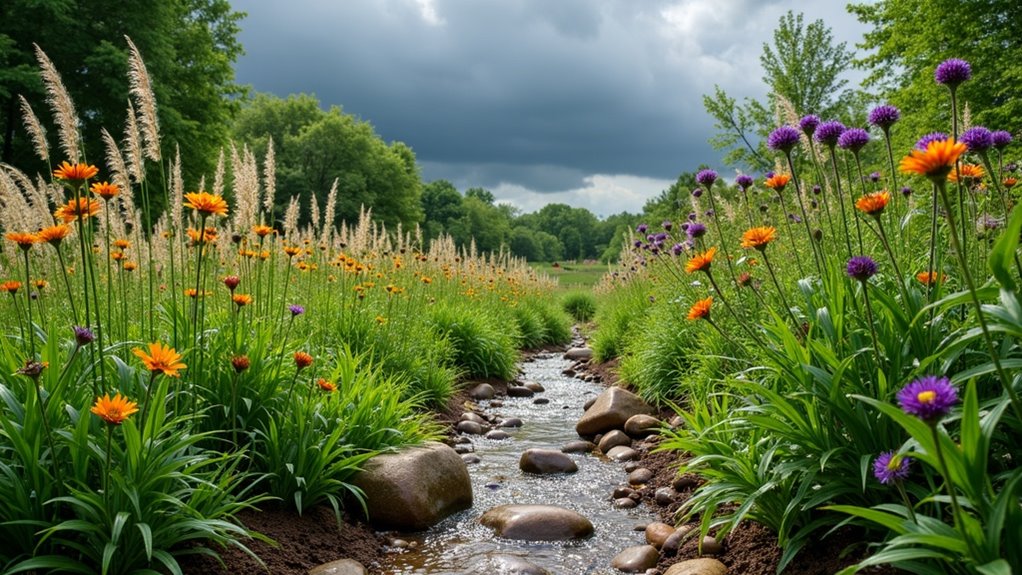
For effective stormwater control in rain gardens, choose native plants like Bee Balm, Virginia Sweetspire, and Button Bush. They thrive in varying moisture levels and support local wildlife. Consider plants like Joe Pye Weed and elderberry for biodiversity and aesthetic appeal. It is crucial to select species suited to your hardiness zone, enhancing resilience and sustainability. Properly maintained, these plants offer long-term benefits for managing runoff. Discover even more insights on maximizing your rain garden’s potential.
Key Takeaways
- Native species like Bee Balm and Virginia Sweetspire thrive in wet soils, promoting biodiversity and attracting pollinators.
- Drought-tolerant plants such as Summersweet and Elderberry adapt to varying moisture levels, enhancing resilience in rain gardens.
- Deep-rooted plants improve soil stabilization and water infiltration while reducing erosion and runoff.
- Grouping plants based on moisture needs optimizes stormwater management and improves water quality.
- Low-maintenance native plants require minimal irrigation, making them sustainable choices for long-term stormwater control.
RAIN GARDEN PLANTS FOR FULL TO PARTIAL SUN
When you’re selecting plants for a rain garden that receives full to partial sun, consider options that not only thrive in these conditions but also enhance the habitat.
Native species like Bee Balm (Monarda spp.) and Button Bush (Cephalanthus occidentalis) attract pollinators and flourish in wet soils.
Native plants such as Bee Balm and Button Bush thrive in wet soils while attracting essential pollinators.
Summersweet (Clethra alnifolia) and Virginia Sweetspire (Itea virginica) provide fragrant blooms while adding visual interest.
Elderberry (Sambucus spp.) offers aesthetic appeal along with edible fruit.
These rain garden plants are low maintenance, support stormwater management, and help control erosion, making them ideal for creating a sustainable and vibrant landscape.
RAIN GARDEN PLANTS FOR PARTIAL SHADE
When planning your rain garden in areas with partial shade, consider plants that thrive under these conditions to guarantee a healthy ecosystem.
Options like Bee Balm and Virginia Sweetspire not only tolerate low light but also provide aesthetic and ecological benefits.
Selecting the right shade-tolerant plants enhances the garden’s resilience and supports local wildlife.
Suitable Plant Choices
Creating a lush rain garden in partial shade requires selecting the right plants that thrive in these conditions while also providing ecological benefits.
Consider native options like Virginia Sweetspire, which offers white flowers and stunning fall color. Elderberry attracts pollinators and produces edible berries, while Bee Balm’s vibrant blooms draw various species.
Button Bush provides height and fragrant flowers, encouraging bees and butterflies. For foliage, the Japanese Painted Fern shines with its striking fronds and thrives in moist soil.
These plants not only enhance your rain garden’s beauty but also support local wildlife and manage soil moisture effectively.
Benefits of Shade Tolerance
Although many gardens are bathed in sunlight, shade-tolerant plants offer unique advantages for rain gardens, particularly in areas affected by tall trees or nearby structures.
Choosing plants like Hosta and Virginia Sweetspire guarantees that you maintain soil moisture while enhancing biodiversity. These species’ deep root systems stabilize soil and improve stormwater management, creating a healthier ecosystem.
Furthermore, by incorporating varied shade-tolerant plants, you support a habitat for essential pollinators and wildlife, even in less sunny conditions.
With options like Japanese Painted Fern, you can also add visual interest, making your rain garden not just functional but beautiful.
NATIVE PLANT SELECTION FOR BIOFILTERS
Selecting native plants for biofilters is essential, as these species are inherently suited to their local environments, ensuring they thrive under varying moisture conditions.
By incorporating plants like Joe Pye Weed and Virginia Sweetspire, you enhance biodiversity and create habitats for local pollinators. Native plants typically require less maintenance and irrigation, making them sustainable choices for your biofilters.
Grouping them based on moisture requirements—wet, mesic, or transitional zones—optimizes their effectiveness in managing stormwater runoff.
Additionally, these plants improve soil structure and filter pollutants, contributing to healthier ecosystems and more efficient stormwater management systems.
BEST NATIVE PLANTS BY HARDINESS ZONE
When selecting plants for your rain garden, it’s essential to contemplate their hardiness zones for ideal performance.
Each zone features specific native plants that thrive in local conditions, enhancing biodiversity while effectively managing stormwater.
Optimal Plant Choices
Choosing the right native plants for your rain garden can greatly enhance its ecological benefits and aesthetic appeal. Here are some ideal choices based on hardiness zones:
| Plant Name | Hardiness Zones |
|---|---|
| Joe-Pye Weed | 3-9 |
| Virginia Sweetspire | 5-9 |
| Buttonbush | 5-9 |
| Bee Balm | 3-9 |
| Switchgrass | 5-9 |
These native plants not only attract butterflies and pollinators but also thrive in moist conditions, helping with stormwater control and improving soil structure in rain gardens. Select plants that suit your zone for the best results.
Zone-Specific Adaptations
Understanding the unique needs of native plants in various hardiness zones can greatly impact the success of your rain garden.
In Zone 3, consider Bee Balm and Chokeberry, which thrive in diverse moisture conditions while supporting pollinators.
For Zone 4, New England Aster and Rose Mallow attract beneficial insects with their mid-summer blooms.
In Zone 5, Virginia Sweetspire and Button Bush excel in wet soil, providing fragrant flowers and vibrant fall colors.
Meanwhile, Zone 8 favors drought-tolerant options like Fiber Optic Grass, while Zone 9’s Egyptian Papyrus Grass and Canna Lily thrive in consistently wet areas, enhancing stormwater control.
MAINTAINING A RAIN GARDEN
To maintain a rain garden effectively, you need to regularly inspect it for weeds, as they compete with desirable plants for essential nutrients and water.
Focus on the following key tasks:
- Water newly planted native species consistently for the first 2-3 years.
- Implement annual mulching to retain moisture, suppress weeds, and enhance soil quality.
- Monitor for signs of erosion or plant health issues, making necessary adjustments.
STEP-BY-STEP GUIDE TO BUILDING A RAIN GARDEN
Building a rain garden involves a systematic approach that guarantees effective stormwater management and enhances your landscape.
Start by determining the size, ideally 10-20% of the draining area. Conduct a soil infiltration test; if it drains slowly, amend it with sand and compost.
Excavate to 6-12 inches, creating a slope for water flow. Map three planting zones—wet, mesic, and changeover—based on moisture levels, selecting native plants that thrive in each.
Finally, implement a maintenance plan that includes regular inspections for weeds, seasonal pruning, and monitoring soil moisture to secure the longevity and functionality of your rain garden.
IMPORTANCE OF VEGETATION IN STORM WATER MANAGEMENT
While many overlook the significance of vegetation in stormwater management, it plays an essential role in protecting our waterways and enhancing landscape resilience.
- Vegetation holds soil in place, reducing erosion and sediment entry into waterways.
- Native plants filter contaminants from stormwater, improving water quality by absorbing nutrients and pollutants.
- Extensive root systems enhance soil structure, promoting infiltration and minimizing surface runoff.
Incorporating diverse plant species not only supports healthy soil biology but also boosts ecosystem resilience to environmental changes.
TREES AND MARGINAL PLANTS FOR RAIN GARDENS
When you design a rain garden, selecting the right trees and marginal plants is essential for maximizing its effectiveness and aesthetic appeal.
Trees like River Birch and Redbud manage stormwater runoff effectively with their extensive roots while providing shade and habitat.
For the edges, consider marginal plants like Canna and Elephant Ear, which thrive in wet conditions.
Virginia Sweetspire adds beauty with fragrant flowers, and Buttonbush attracts pollinators, enhancing biodiversity.
Incorporating these native species not only boosts soil health but also creates supportive habitats, reducing erosion and ensuring your rain garden remains vibrant and functional for years to come.





