
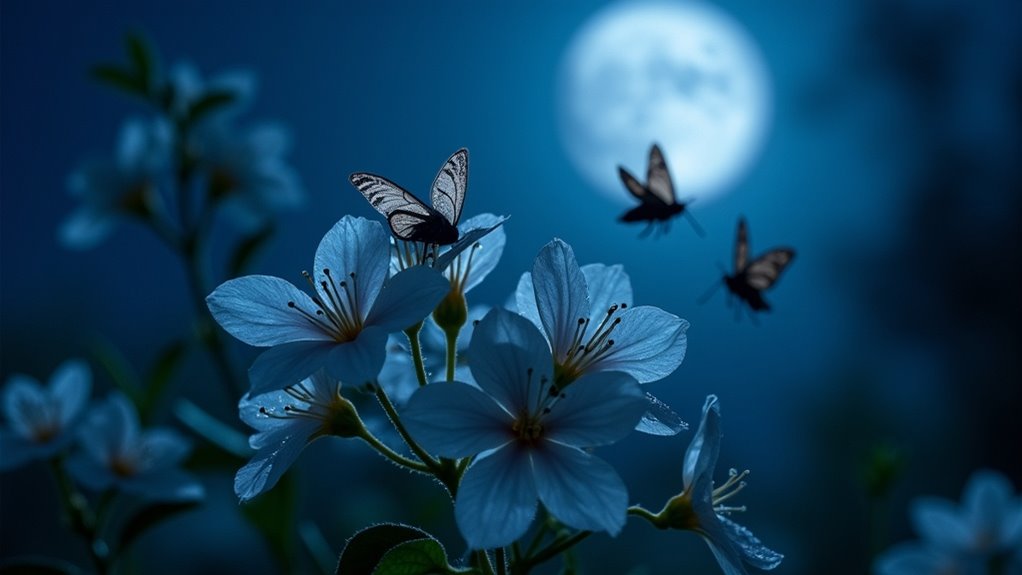
To support moths for night pollination, focus on planting native species like white or red oak, which sustain over 550 moth species. Incorporating night-blooming flowers, such as those with pale petals and strong scents, can also attract moths. These plants provide essential food sources and habitats for nocturnal pollinators. By enhancing your garden with these species, you help foster moth populations and contribute to ecological balance. Discover more about the specific plants that can help you achieve this.
Key Takeaways
- Night-blooming flowers with pale or white petals enhance visibility and attract moths during nocturnal foraging.
- Strongly scented flowers released at night guide moths to nectar sources effectively.
- Trumpet-shaped blossoms provide abundant nectar, meeting the energy needs of moths.
- Native host plants like White Oak and River Birch support diverse moth species and serve as breeding grounds.
- Incorporating a variety of native nectar plants diversifies food sources, attracting different moth species for night pollination.
About Moths
Moths, which belong to the order Lepidoptera, represent a fascinating and diverse group of insects, with around 140,000 species worldwide—far outnumbering butterflies by a staggering ratio of 10 to 1.
In North America alone, over 11,000 species of moths thrive, playing vital roles as pollinators of native plants. While often overshadowed by bees, these nocturnal insects contribute considerably to the food web through their interactions with flowering plants.
Moths typically feed on nectar, aiding in plant reproduction. Their muted colors and unique features, like feathery antennae, enhance their survival while they fulfill essential ecological functions.
Night-Blooming Flowers
Night-blooming flowers play a pivotal role in supporting moth populations, providing them with the resources they need to thrive in their nocturnal foraging activities.
These plants exhibit specific traits that enhance their attraction to nocturnal pollinators:
- Color: Pale or white petals reflect moonlight, improving visibility in the dark.
- Fragrance: They release stronger scents at night, guiding moths to their nectar sources.
- Nectar: Trumpet-shaped blossoms offer abundant nectar, essential for moths’ energy needs.
Table 1. Night-Blooming Flowers for Moths
As you explore the fascinating world of nocturnal pollinators, you’ll find that certain plants specifically cater to moths by providing essential resources during their nighttime foraging. The following table highlights key night-blooming flowers known for attracting various moth species through their fragrance and nectar:
| Flower | Nectar Availability | Fragrance Strength |
|---|---|---|
| Moonflower | High | Strong |
| Evening Primrose | Moderate | Moderate |
| Night-Blooming Jasmine | High | Very Strong |
| Datura (Angel’s Trumpet) | High | Strong |
| Four O’Clock | Moderate | Moderate |
These plants play a vital role in supporting nocturnal pollinators.
Food Sources and Host Plants
Understanding the food sources and host plants for moths is vital for supporting their populations.
Native plants, such as White Oak and Pussy Willow, not only provide essential nectar but also serve as larval host sites, ensuring caterpillar survival.
Essential Native Host Plants
When contemplating essential native host plants, it’s important to recognize their role in supporting moth populations, which are essential for nighttime pollination.
These plants not only provide food but also habitat for diverse moth species. Here are three key native hosts to evaluate:
- White or Red Oak (Quercus alba or Quercus rubra) – Supports over 550 moth species.
- River Birch (Betula nigra) – Hosts nearly 320 moth species and offers ornamental value.
- Witch Hazel (Hamamelis spp.) – Attracts over 60 moth species with unique blooms, enhancing biodiversity for night pollinators in your garden.
Nectar Sources for Moths
While many plant species provide nectar for moths, selecting the right combination of night-blooming flowers and larval host plants is essential for attracting these significant nocturnal pollinators.
Moths, as nectar generalists, thrive on diverse nectar sources, particularly pale or white flowers that bloom at night.
Keystone plants like oaks, birches, and willows not only offer crucial nectar but also serve as host plants for various moth species.
Table 2. Native Host Plants for Moths
Native host plants play an essential role in sustaining moth populations, providing important food sources for their larval stages. Many moth species depend on specific plants to complete their lifecycle, enhancing biodiversity.
Key native host plants include:
- Oak Trees (Quercus spp.) – Supporting over 550 moth species, they’re fundamental for biodiversity.
- River Birch (Betula nigra) – Hosting nearly 320 moth species, it offers rapid growth and ornamental value.
- Witch Hazel (Hamamelis spp.) – Supporting over 60 species, it attracts various pollinators.
Incorporating these plants into your garden promotes habitats for moths and their caterpillars, essential for ecological health.
Gardening Practices for Moths
To support moth populations, embrace the natural imperfections in your plants, as these caterpillar marks indicate a thriving ecosystem.
You should also avoid harmful pesticides that threaten beneficial insects, ensuring a safe environment for nocturnal pollinators.
Embrace Plant Imperfections
Embracing plant imperfections is fundamental for fostering a thriving ecosystem that supports moths and other wildlife. By allowing some foliage damage from caterpillars, you provide essential food sources for birds and maintain ecosystem health.
To enhance your garden’s support for moths and butterflies, consider the following:
- Plant native species: They adapt better to local conditions and offer necessary resources for moth life cycles.
- Incorporate host plants: These serve as breeding grounds for caterpillars.
- Diversify nectar plants: This attracts various moth species, enhancing pollination and biodiversity.
Your garden can flourish while supporting these significant pollinators.
Avoid Harmful Pesticides
Maintaining a healthy ecosystem involves more than just accepting plant imperfections; it also means steering clear of harmful pesticides that can devastate moth populations. These chemicals indiscriminately harm all insects, leading to significant declines in moths, which are crucial for pollination and biodiversity.
Instead of resorting to pesticides, embrace integrated pest management (IPM) practices to control pests while protecting beneficial insects. Planting diverse native species attracts moths and fosters a resilient garden ecosystem, reducing the need for harmful interventions.
Conservation and Awareness
Although often overshadowed by their daytime counterparts, moths play an essential role as nocturnal pollinators, making conservation efforts for these creatures important.
To foster awareness and protect moths, consider these actions:
- Educate yourself and others about the impact of habitat loss and light pollution on moth populations.
- Support local conservation organizations like the Xerces Society, which enhances habitats for moths and other pollinators.
- Participate in community events, such as National Moth Week, to raise awareness of these often-misunderstood insects and their ecological significance.





