
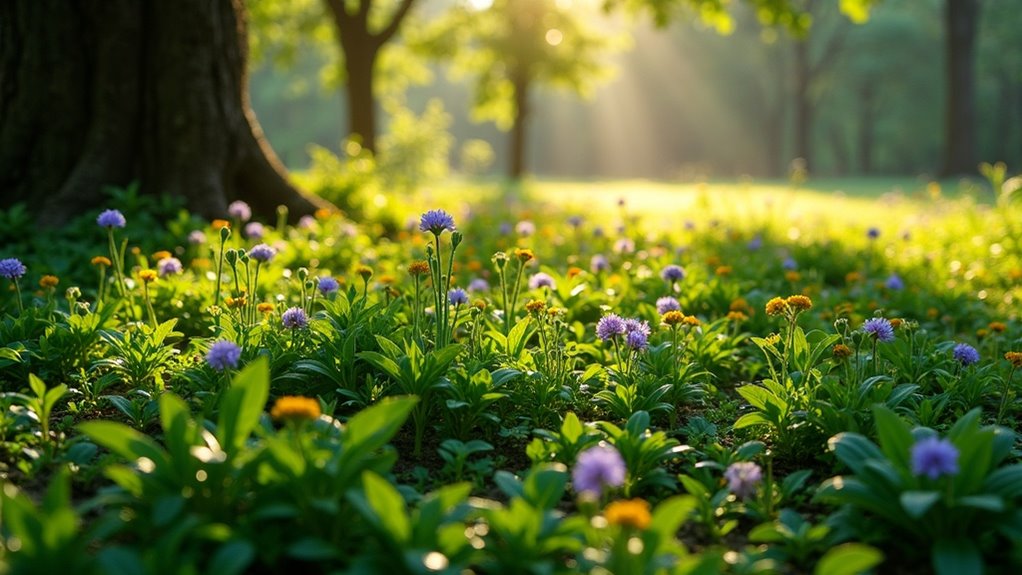
To suppress weeds effectively as living mulch, consider using plants like strawberries, nasturtiums, and creeping thyme. These species block sunlight, retain soil moisture, and improve overall soil health. Sweet potato vines also spread quickly while providing edible tubers. Additionally, red clover serves as a nitrogen-fixing cover crop, enhancing soil fertility. By integrating these plants into your garden, you not only combat weeds but also boost your garden’s aesthetic appeal and biodiversity. Explore further for more options and benefits.
Key Takeaways
- Strawberries create dense mats that block sunlight, effectively suppressing weed germination while producing edible fruit.
- Nasturtiums form thick layers, suppressing weeds while providing culinary flowers and leaves.
- Creeping Thyme retains moisture and attracts pollinators, helping to prevent weed growth.
- Sweet Potato Vines quickly spread over soil, outcompeting weeds and producing edible tubers.
- Red Clover acts as a nitrogen-fixing cover crop, enhancing soil fertility and limiting weed establishment.
Benefits of Using Living Mulch for Weed Suppression
Using living mulch offers significant benefits for weed suppression, especially since it effectively blocks sunlight, which weeds need to germinate. This natural barrier aids in weed control while enhancing soil moisture retention.
Edible ground covers like clover and creeping thyme require minimal maintenance and thrive in various conditions, making them excellent choices for suppressing weeds. Additionally, extensive root systems from plants like yarrow contribute to soil health, limiting nutrient competition.
Top Edible Ground Covers That Act as Living Mulch
Several edible ground covers serve as effective living mulch, offering both culinary benefits and weed suppression.
Strawberries and nasturtiums create dense mats that suppress weeds by blocking sunlight and competing for nutrients.
Creeping thyme not only provides culinary uses but also forms a thick layer that retains soil moisture and attracts pollinators with its summer blooms.
Sweet potato vines spread quickly, covering soil effectively while producing edible tubers.
Red clover acts as a nitrogen-fixing cover crop, improving soil fertility and suppressing weeds through dense growth.
Oregano thrives as a low-maintenance ground cover, efficiently outcompeting weeds in various areas of the garden.
Aesthetic Appeal of Ground Cover Plants
While ground cover plants are often praised for their weed-suppressing abilities, their aesthetic appeal shouldn’t be overlooked.
Ground covers like Sweet Woodruff thrive in partial shade, creating a lush carpet adorned with delicate white flowers in spring.
Edible varieties such as Creeping Thyme and Nasturtium not only suppress weeds but also add vibrant flowers, enhancing visual interest.
Low-growing Sedum contributes texture, perfect for rock gardens, while flowering plants like Yarrow and Mazus attract beneficial pollinators, enriching both beauty and biodiversity.
Furthermore, strawberries yield delicious fruit alongside their attractive foliage, making your garden both productive and visually appealing.
Seasonal Considerations for Planting Living Mulch
When planning to plant living mulch, timing is essential for maximizing its weed-suppressing benefits. Spring is ideal, as many ground cover plants establish quickly and begin effective weed suppression within the growing season.
Consider frost tolerance when selecting living mulch for winter crops; some species thrive in cold, while others may not survive harsh winters. If planting during summer, guarantee adequate irrigation due to higher temperatures.
Fall planting lets living mulch establish roots before winter, preparing them for vigorous spring growth and better weed suppression. Additionally, practicing crop rotation maintains soil fertility, supporting the health of your living mulch year-round.
Community Engagement Through Edible Gardening
Community engagement through edible gardening not only cultivates a sense of belonging but also enhances sustainable practices within neighborhoods.
By participating in community gardening, you can:
- Learn diverse plantings that boost local biodiversity and food security.
- Attend gardening workshops to gain skills in using living mulch to suppress weeds naturally.
- Connect with fellow gardeners, fostering a supportive network for sharing experiences.
- Participate in community events like plant swaps or harvest festivals, enriching local food systems.
These initiatives empower you to contribute positively to your community while enjoying the benefits of edible gardening.





