
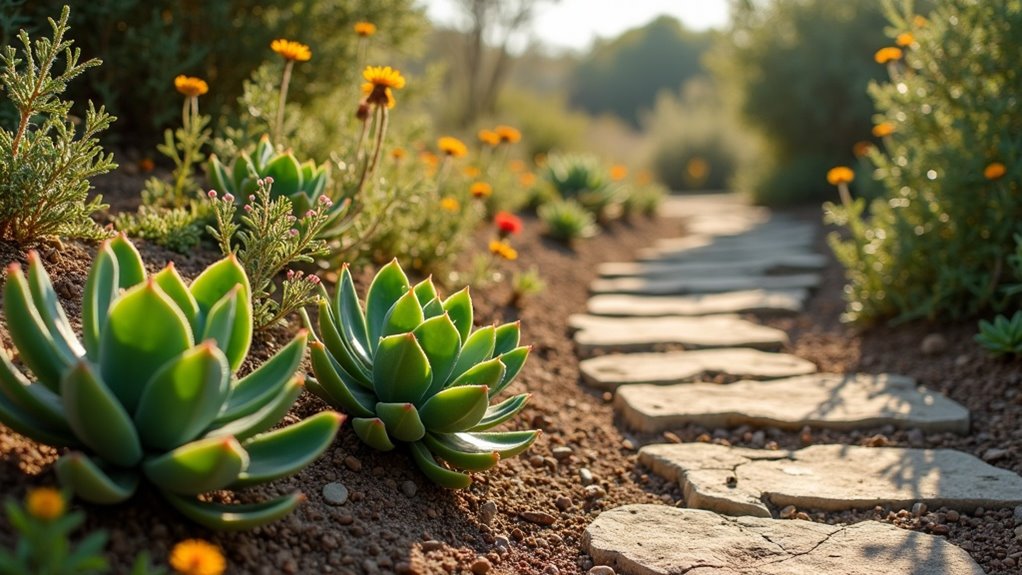
If you’re looking for plants that thrive in poor soil and require little care, consider Asters, Bee Balm, Coneflowers, Catmint, Lavender, and Rosemary. These hardy perennials are drought-tolerant and flourish in tough conditions, attracting beneficial pollinators along the way. They offer vibrant colors and fragrances while needing minimal maintenance. You’ll enjoy a beautiful garden with ease. Stick around to discover even more resilient options that can enhance your landscape.
Key Takeaways
- Aster thrives in poor soil and is drought-tolerant, requiring low maintenance after flowering.
- Bee Balm grows well in clay and poor soil while attracting pollinators and resisting deer and rabbits.
- Coneflower is a hardy perennial that flourishes in poor soil and attracts bees and butterflies.
- Catmint enjoys well-drained poor soil, is drought-tolerant, and suppresses weeds with its fragrant foliage.
- Lavender and Rosemary thrive in dry, poor, and rocky conditions, requiring minimal care and attracting beneficial pollinators.
Aster
When you’re looking for resilient plants that can thrive in less-than-ideal soil, asters should be at the top of your list.
These hardy perennials grow well in poor soil conditions, including clay and sandy types, making them perfect for challenging garden environments. Asters prefer full sun but can tolerate partial shade, and they’re drought-tolerant once established.
Asters thrive in poor soil, embrace full sun, and are drought-tolerant, making them ideal for tough garden conditions.
With heights ranging from 1 to 8 feet, they provide colorful flowers and vibrant autumn color. Plus, they’re low maintenance—just cut them back after flowering to encourage new growth.
Asters are an excellent choice for vibrant, easy-care gardens!
Bee Balm
Bee Balm, also known as Monarda, is a standout choice for gardeners seeking resilient plants that thrive in poor soil conditions. This perennial grows well in clay and is drought-tolerant, reaching heights of up to 4 feet. It produces vibrant blooms that attract pollinators like butterflies, enhancing biodiversity in your garden. Bee Balm is self-seeding and spreads through rhizomes, making it perfect for low-maintenance gardens. Plus, it’s resistant to rabbits and deer, ensuring your efforts pay off.
| Feature | Details |
|---|---|
| Hardiness Zones | 4 to 9 |
| Blooming Season | Summer |
| Growth Habit | Aggressive, low-maintenance |
Coneflower
If you’re looking for a resilient addition to your garden, consider the Coneflower, or Echinacea. This hardy perennial thrives in poor soil and is drought-tolerant once established, making it perfect for low-maintenance gardens.
With minimal care, you’ll enjoy its striking, daisy-like blossoms that bloom in early summer, attracting essential pollinators like bees and butterflies. Coneflowers can reach heights of 2-5 feet and adapt well to various climates, thriving in USDA Hardiness Zones 3a to 8b.
Regular deadheading can enhance its vibrant color, extending the blooming season and adding ongoing interest throughout your summer garden.
Catmint
Following the vibrant beauty of Coneflower, Catmint (Nepeta spp.) offers another excellent choice for gardeners seeking resilient plants. This drought-tolerant perennial thrives in poor, well-drained soil, requiring minimal care once established. Catmint reaches heights of 1-3 feet, showcasing delightful purple blooms that attract pollinators like bees and butterflies. With its fragrant foliage, it not only enhances your garden’s appeal but also serves as effective ground cover, suppressing weeds. Plus, it flourishes in full sun or partial shade, making it versatile for various garden conditions.
| Feature | Description | Benefits |
|---|---|---|
| Soil | Well-drained | Thrives in poor soil |
| Watering | Minimal | Drought tolerant |
| Blooms | Purple | Attracts pollinators |
| Foliage | Fragrant | Enhances garden aroma |
| Growth Habit | Ground cover | Suppresses weeds |
Lavender
Lavender (Lavandula angustifolia) stands out as a superb addition to any low-maintenance garden, thriving effortlessly in dry, poor, and rocky soil.
This hardy plant loves full sun, requiring at least six hours of direct sunlight daily to truly thrive. Once established, lavender is drought-tolerant, needing minimal care and infrequent watering.
It flourishes best in well-drained conditions, making it perfect for those less-than-ideal spots in your landscape. With proper annual pruning and deadheading, you can maintain its shape and promote new growth.
Ranging from Zones 5a to 9b, lavender adapts well to various climates, ensuring its beauty with ease.
Rosemary
When you’re looking for a hardy plant that thrives in poor soil, rosemary is an excellent choice.
It flourishes in sandy and rocky conditions, requiring minimal care while benefiting from full sun and well-drained soil.
Plus, its drought tolerance means you won’t have to worry about frequent watering, making it perfect for low-maintenance gardens.
Soil Preferences and Tolerance
Although many herbs require rich, fertile soil to thrive, rosemary (Salvia rosmarinus) stands out for its remarkable ability to flourish in poor, well-drained conditions.
This hardy perennial is perfect for your low-maintenance garden, as it can tolerate neglect and infrequent watering. Here’s what you should know:
- Prefers sandy or rocky soil
- Thrives in full sun (at least six hours daily)
- Drought-tolerant once established, needing minimal moisture
- Attracts beneficial pollinators like bees and butterflies
With these qualities, rosemary is an excellent choice for gardeners looking for resilience and beauty in challenging conditions.
Maintenance and Care Tips
To guarantee your rosemary thrives in poor soil conditions, it’s essential to keep a few key maintenance practices in mind.
| Care Aspect | Tips |
|---|---|
| Sunlight | Make sure it gets full sun, 6-8 hours daily. |
| Watering | Use infrequent watering; rosemary is drought-tolerant. |
| Soil | Plant in well-drained, poor soil for best results. |
| Pruning | Trim after flowering to promote dense growth and maintain shape. |
Rosemary’s low-maintenance nature means it can tolerate being root bound, so don’t worry about frequent repotting. With minimal care, you’ll enjoy a thriving plant!
Sedum
Sedum, often referred to as stonecrop, stands out as an excellent choice for gardeners seeking resilient plants that thrive in challenging conditions.
These succulent perennials are perfect for low-maintenance gardens, as they require minimal maintenance and flourish in poor soil.
Here’s what you’ll love about Sedum:
- Highly drought-tolerant and adaptable
- Flourishes in full sun and high heat
- Over 300 diverse species for varied designs
- Stores water in fleshy leaves for resilience
With their robust nature, Sedum can survive neglect while adding beauty to your landscape.
Embrace these hardy plants for a stunning, stress-free garden.
Yarrow
If you’re looking for another hardy option to complement your garden alongside Sedum, consider Yarrow (Achillea millefolium).
This drought-tolerant perennial thrives in poor soil and loves full sun, making it perfect for low-maintenance gardens. Once established, Yarrow requires minimal watering and can withstand periods of neglect.
It features feathery, aromatic foliage and produces flat-topped clusters of small flowers in various colors, adding vibrant visual interest throughout the summer.
Growing 2-3 feet tall, Yarrow spreads easily, making it ideal for borders and cutting gardens. Hardy in USDA Hardiness Zones 3 to 9, it adapts well to diverse climates.





