
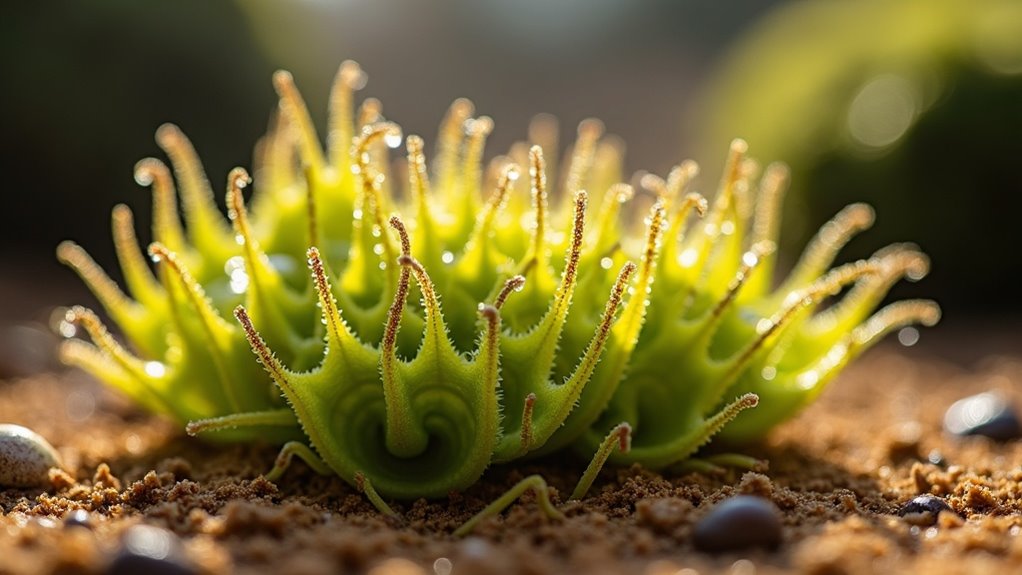
Carnivorous plants are carnivorous because they thrive in nutrient-poor soils that lack essential elements for growth. They’ve evolved specialized adaptations, like unique trapping mechanisms, to capture and digest insects. These adaptations enable them to absorb vital nutrients, particularly nitrogen, from their prey, which compensates for the deficiencies in their environments. Understanding these fascinating adaptations sheds light on their survival strategies and the challenges they face in their ecosystems. Explore further to uncover more about their complexities.
Key Takeaways
- Carnivorous plants thrive in nutrient-poor soils by supplementing their nutrient intake through the digestion of insects.
- Specialized trapping mechanisms allow these plants to efficiently capture and digest prey for essential nutrients.
- They absorb critical elements from decomposed insects, enhancing growth and reproduction in low-nutrient environments.
- Traditional fertilization methods can harm carnivorous plants, making live insects a safer feeding alternative.
- Unique adaptations maximize nitrogen intake, crucial for their survival and growth in nutrient-deficient habitats.
The Nutritional Needs of Carnivorous Plants
How do carnivorous plants thrive in nutrient-poor soils?
These plants, adapted to low-nitrogen environments, primarily obtain essential nutrients from trapping, typically insects. By digesting their prey, they supplement their nutrient intake, essential for growth and reproductive success.
This process enables them to absorb critical elements from the decomposing insects in their moist habitats. While traditional fertilization methods can harm these plants, relying on live insects for feeding provides a safe and effective alternative.
Notably, some carnivorous species demonstrate varying tolerance to specific nutrients, suggesting a complexity in their nutritional needs that challenges conventional fertilizer avoidance.
Adaptations to Nutrient-Poor Environments
Carnivorous plants possess remarkable adaptations that enable them to thrive in nutrient-poor environments. By evolving specialized trapping mechanisms, these plants efficiently capture and digest insects, supplementing their nitrogen intake essential for growth. Adaptations include modified leaves and digestive glands, which maximize nutrient absorption from decomposed prey. The table below illustrates various trapping methods and their effectiveness in nutrient-poor soils.
| Trapping Method | Description | Nutrient Acquisition |
|---|---|---|
| Pitfall | Liquid-filled traps | Captures insects |
| Snap | Rapid closure mechanism | Efficient digestion |
| Flypaper | Sticky surfaces | Entangles prey |
Unique Trapping Mechanisms
Carnivorous plants employ various trapping mechanisms that are essential for nutrient acquisition in their nutrient-poor habitats.
You’ll find that each type, whether it’s a pitfall trap or a snap trap, showcases unique adaptations designed to efficiently capture prey.
Understanding these mechanisms reveals how these plants optimize their survival in challenging environments.
Types of Traps
While exploring the fascinating domain of unique trapping mechanisms, you’ll find that carnivorous plants have evolved five distinct types of traps, each tailored to thrive in nutrient-poor soils.
Pitfall traps, such as those in Sarraceniaceae, lure insects with nectar and patterns, leading them to a digestive liquid.
Flypaper traps rely on sticky mucilage to ensnare prey, while snap traps, like the Venus flytrap, close rapidly upon stimulation of trigger hairs.
Finally, lobster-pot traps allow easy entry but hinder escape, ensuring successful nutrient absorption through digestive enzymes.
Each mechanism reflects an adaptation to the challenges of nutrient scarcity.
Adaptations for Nutrient Acquisition
To thrive in nutrient-poor environments, these remarkable plants have developed a range of specialized adaptations for nutrient acquisition, utilizing unique trapping mechanisms. Each mechanism effectively captures prey, allowing these carnivorous plants to supplement their nutrient intake.
| Trap Type | Mechanism Description |
|---|---|
| Pitfall Trap | Nepenthes and Sarracenia capture insects in liquid-filled pits. |
| Snap Trap | Venus flytraps close rapidly upon triggering hairs, ensnaring prey. |
| Flypaper Trap | Sundews use sticky mucilage to trap insects and absorb nutrients. |
| Bladder Trap | Utricularia creates a vacuum to suck in small organisms. |
| Lobster-pot Trap | Genlisea traps facilitate easy entry but hinder escape for prey. |
Digestion and Nutrient Absorption
In nutrient-poor soils, the ability of certain plants to digest and absorb nutrients from prey is a remarkable adaptation that enhances their survival.
Venus flytraps and pitcher plants secrete specialized digestive fluids rich in hydrolytic enzymes like proteases and chitinases, facilitating efficient digestion. These fluids release essential ions such as potassium, sodium, calcium, and magnesium, vital for their growth.
After capturing prey, these plants absorb nitrogen and other nutrients, considerably boosting their growth rates. Additionally, some have formed mutualistic relationships with microorganisms to aid in nutrient absorption, compensating for any digestive enzyme deficiencies and optimizing their nutrient acquisition strategies.
Evolutionary Insights Into Carnivory
As nutrient-poor environments challenge plant survival, the evolution of carnivory in certain flowering plants illustrates a compelling adaptive response.
Carnivorous plants have developed unique traits to thrive, including:
- Independent evolution across at least 12 times in five different plant orders, showcasing diverse evolutionary adaptations.
- Structural innovations like sticky mucilage and snap traps, which enhance prey capture efficiency.
- Cost-benefit energy models demonstrating how these adaptations improve competitive ability and overall fitness in nutrient-deficient ecosystems.
These evolutionary strategies enable carnivorous plants to effectively extract essential nutrients, ensuring their survival in challenging habitats.
Conservation and Biodiversity Challenges
While the unique adaptations of carnivorous plants enable them to thrive in nutrient-poor soils, their survival is increasingly threatened by conservation and biodiversity challenges.
Coastal Plain ecosystems, rich in endemic species, suffer from habitat destruction driven by human activity and climate change. With approximately 1,816 endemic species, the loss of these habitats jeopardizes nutrient cycling and overall ecosystem health.
Longleaf pine savannas, vital for various carnivorous plants, face threats including poaching and environmental changes. Conserving these ecosystems is essential, as declines in biodiversity can disrupt insect populations and destabilize the delicate ecological dynamics that support these unique plant species.





