
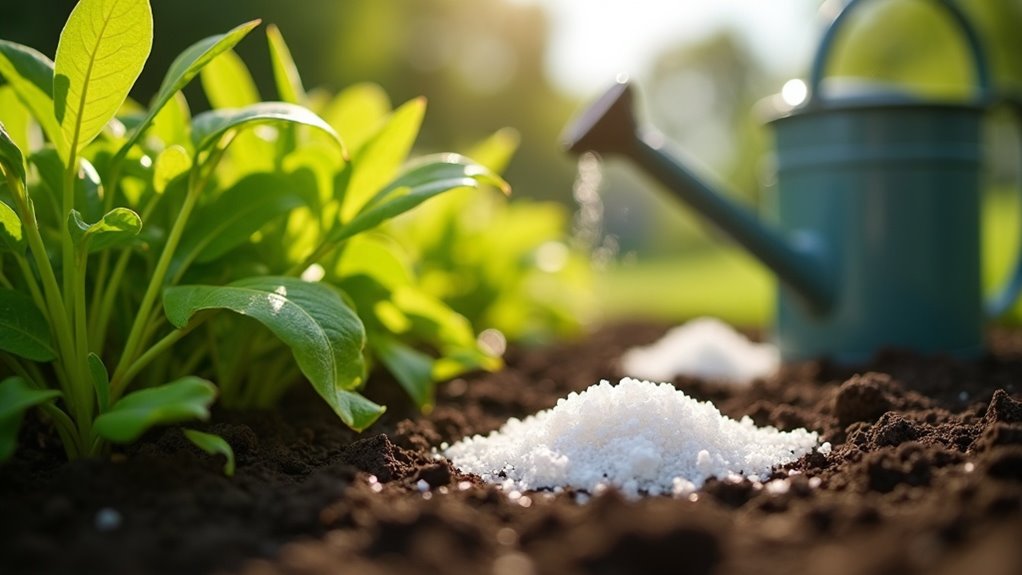
Epsom salt, or magnesium sulfate, is crucial for plants in magnesium-deficient soil. It provides magnesium and sulfur, enhancing nutrient uptake and promoting healthy growth. Symptoms like yellowing leaves and stunted growth signal deficiency. Epsom salt’s high solubility allows quick absorption by roots, supporting chlorophyll production. However, overusing it can lead to toxicity and hinder calcium absorption. To guarantee the best results, it’s essential to apply it correctly and explore sustainable alternatives. There’s more important information on effective application methods ahead.
Key Takeaways
- Epsom salt, or magnesium sulfate, provides essential magnesium and sulfur, crucial for plant health and nutrient uptake in deficient soils.
- It helps alleviate symptoms of magnesium deficiency, such as yellowing leaves and stunted growth, by enhancing nutrient delivery.
- Rapid absorption by plant roots allows for quick relief from magnesium deficiency, promoting robust growth and improved chlorophyll production.
- Proper application of Epsom salt can be done as a foliar spray or soil drench to maximize its benefits for plants.
- Regular soil testing is essential to confirm deficiency, as overuse can lead to toxicity and nutrient imbalances.
Understanding Epsom Salt and Its Composition
Epsom salt, a crystalline compound known scientifically as magnesium sulfate, plays an essential role in plant nutrition. This compound consists of magnesium, sulfur, and oxygen, providing significant secondary nutrients that plants require in smaller quantities.
When a soil test indicates magnesium deficiency, applying Epsom salt can rapidly improve nutrient uptake due to its high solubility. Magnesium is important for chlorophyll production and overall plant health, while sulfur supports protein synthesis.
However, it’s important to use Epsom salt judiciously, as excessive application can inhibit calcium absorption, leading to potential nutrient imbalances that affect plant growth. Understanding its composition is key to effective use.
Identifying Magnesium Deficiency in Plants
To identify magnesium deficiency in your plants, watch for symptoms like yellowing leaves with green veins, a condition known as interveinal chlorosis.
Stunted growth and premature leaf drop, especially in older leaves, can also indicate a lack of magnesium.
Conducting soil tests is essential to accurately diagnose the issue and determine if your soil’s nutrient levels are contributing to the problem.
Symptoms of Deficiency
How can you identify magnesium deficiency in your plants? Recognizing symptoms of magnesium deficiency is essential for effective management. Here are some key indicators:
- Yellowing leaves with green veins (interveinal chlorosis), especially in older foliage.
- Stunted growth and poor fruit development, affecting overall yield.
- Leaf edges curling or becoming necrotic, signaling stress.
- Certain plants, like tomatoes and roses, show these symptoms more readily than others.
If your soil is deficient in magnesium or sulfur, applying good Epsom salt can help.
Scientific studies support using it to alleviate these specific deficiencies effectively.
Soil Testing Importance
While you may notice symptoms of magnesium deficiency in your plants, accurately diagnosing the issue requires a thorough soil test. Soil testing is essential as it provides detailed nutrient profiles, helping you understand your soil’s specific needs. This prevents over-application of amendments like Epsom salt, which can harm plant health if unnecessary.
| Aspect | Importance |
|---|---|
| Soil Testing | Identifies nutrient deficiencies |
| Magnesium Deficiency | Rare in well-maintained soils |
| Nutrient Profiles | Guides precise amendment application |
Consult local extension offices for expert soil testing services and interpretation of results to enhance your garden’s health.
Benefits of Using Epsom Salt for Magnesium Deficient Soil
Using Epsom salt in magnesium-deficient soil greatly enhances nutrient delivery and supports chlorophyll production in your plants.
By providing magnesium and sulfur, it helps resolve symptoms like yellowing leaves, promoting robust growth.
Regular applications can guarantee your plants receive the essential nutrients they need to thrive.
Magnesium Nutrient Delivery
Magnesium deficiency in soil can severely impact plant health, making Epsom salt an effective remedy to restore essential nutrients.
Here are some benefits of using Epsom salt for magnesium nutrient delivery:
- Provides magnesium and sulfur, vital for nutrient uptake.
- Rapidly absorbed by plant roots, ensuring quick relief from deficiency.
- Enhances nutrient delivery efficiency, especially in plants like tomatoes and peppers.
- Can be applied as a foliar spray or soil drench for immediate effects.
Chlorophyll Production Support
Chlorophyll production hinges on the availability of magnesium in soil, making Epsom salt a powerful solution for enhancing this essential process in plants. By supplying magnesium sulfate, Epsom salt boosts chlorophyll levels, promoting effective sunlight absorption. This is particularly beneficial for magnesium-sensitive plants like tomatoes and peppers. Increased chlorophyll production leads to greener foliage and improved plant health, crucial for overall vitality. Regular applications in magnesium-deficient soils support sustained chlorophyll production throughout the growing season.
| Benefit | Epsom Salt Effect | Plant Examples |
|---|---|---|
| Chlorophyll Boost | Increases levels | Tomatoes, Peppers |
| Enhanced Photosynthesis | Improves efficiency | All magnesium-sensitive plants |
| Overall Plant Health | Increases vitality | Vegetables and Flowers |
Risks and Limitations of Epsom Salt Application
While Epsom salt can offer benefits to plants, its application isn’t without risks and limitations that every gardener should consider.
- Overuse can cause magnesium toxicity, inhibiting calcium and potassium uptake.
- Without confirming a deficiency, regular application may worsen nutrient imbalances.
- Epsom salt provides a temporary fix, ignoring underlying soil issues like poor nutrient retention.
- Excessive application, especially in foliar sprays, can lead to leaf scorch and contribute to groundwater pollution, harming beneficial soil microorganisms due to increased salinity.
Understanding these risks helps you make informed choices for healthier plants and soil.
Best Practices for Using Epsom Salt in Gardening
To maximize the benefits of Epsom salt in your gardening practices, it’s crucial to follow specific guidelines that guarantee plants receive the right amount of magnesium without adverse effects.
Start with soil testing to confirm magnesium deficiency and ascertain ideal soil pH. When applying Epsom salt, dilute it at a ratio of 2 tablespoons per gallon of water, and consider foliar spraying in the morning or evening for better absorption.
For roses, use 1 tablespoon per gallon based on shrub height. Limit applications to once or twice monthly to prevent calcium absorption issues and help prevent blossom end rot in your plants.
Alternatives to Epsom Salt for Soil Health
Many gardeners seek alternatives to Epsom salt for enhancing soil health, especially when looking for sustainable practices to improve nutrient availability. Consider these options:
- Organic Compost: Enriches soil structure and retains nutrients.
- Soil Testing: Identifies specific nutrient deficiencies to guide targeted amendments.
- Slow-Release Organic Fertilizers: Provides balanced nutrients while minimizing leaching risks.
- Crop Rotation: Maintains soil health and prevents nutrient depletion, supplying magnesium naturally.
Utilizing these alternatives not only promotes soil health but also supports long-term sustainability in your gardening practices.
Embracing organic material enhances overall soil condition, ultimately benefiting your plants.





