
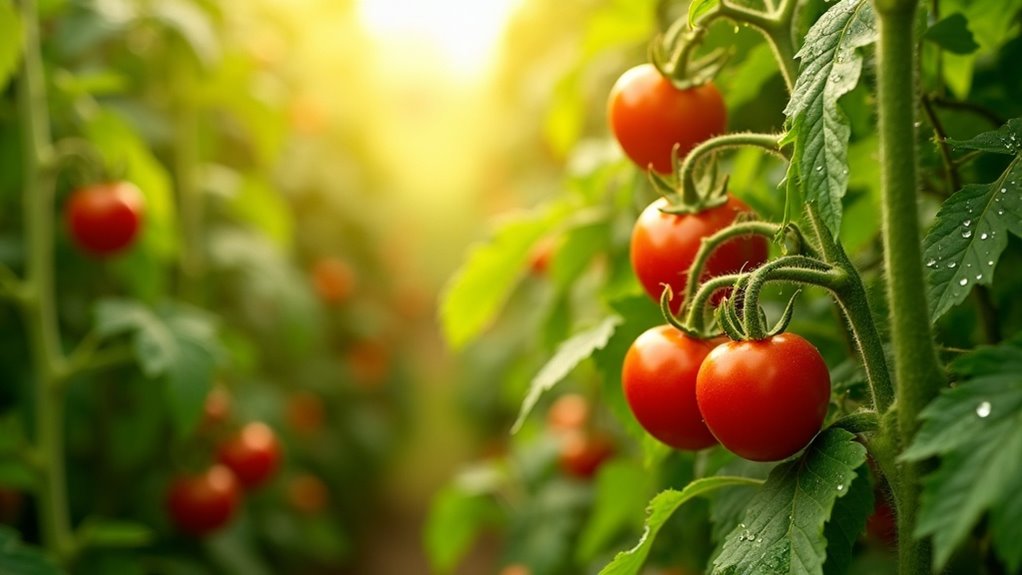
Pruning your tomato plants is essential for improving airflow and maximizing yield. By removing suckers and thinning dense foliage, you enhance airflow around your plants, which reduces humidity and lowers the risk of fungal diseases. This also allows more sunlight to penetrate the leaves, boosting photosynthesis, resulting in larger, healthier fruit. Additionally, focusing the plant’s energy on fewer main stems increases overall productivity. Discover the specific techniques that can take your tomato harvest to the next level.
Key Takeaways
- Pruning tomato plants enhances airflow, reducing humidity and minimizing the risk of fungal diseases like blight and mildew.
- Improved airflow allows for better sunlight penetration, boosting photosynthesis and overall plant growth.
- Focused energy on fewer stems results in larger, higher-quality fruits and increased yields.
- Regular pruning eliminates unhealthy leaves, preventing disease spread and promoting healthier plants.
- Optimized airflow extends the harvest season by encouraging continuous fruit development and reducing pest issues.
The Importance of Pruning for Tomato Plants
Pruning tomato plants is an essential practice for any gardener aiming to achieve peak growth and fruit production. By strategically removing suckers and overcrowded branches, you enhance airflow around the foliage, reducing humidity and minimizing the risk of fungal diseases.
This technique allows sunlight to penetrate all parts of the plant, promoting healthier growth and improving fruit quality. Regular pruning directs the plant’s energy towards fruit production, increasing harvestable yields and extending the overall harvest season.
Additionally, keeping tomato plants off the ground through effective pruning reduces soil-borne diseases, ensuring maximum plant vigor and maximizing energy production for robust growth.
Understanding Tomato Varieties and Their Growth Habits
Choosing the right tomato variety is essential for achieving ideal growth and fruit production in your garden. Understanding their growth habits helps you implement suitable pruning techniques. Here’s what you need to know:
- Indeterminate tomatoes grow continuously, producing fruit throughout the season.
- They require more extensive pruning to enhance air flow and overall health.
- Determinate varieties, like Roma, yield all their fruit at once and need minimal pruning.
- Each variety’s growth habit influences your pruning approach, with indeterminate types benefiting from complex systems like overhead trellises to maximize their potential.
Effective Pruning Systems for Maximizing Yield
To maximize yield in tomato plants, implementing effective pruning systems is essential, especially for different varieties.
For indeterminate varieties, utilize an overhead trellis system, allowing for vertical growth and sunlight exposure. The basket weave pruning system also supports these plants while enhancing airflow.
Regularly applying pruning techniques, like removing suckers below the first flower cluster, promotes circulation and light penetration. Additionally, maintain one or two main stems to reduce overcrowding.
Employ bottom pruning and thinning foliage to optimize energy distribution within the plant, ensuring larger yields and extending your harvest season.
Efficient pruning is key to thriving tomato plants.
Basic Pruning Techniques for Healthier Plants
Effective pruning techniques can greatly enhance the health of your tomato plants. Here are some essential methods to implement:
- Remove suckers: Focus the plant’s energy on fruit production instead of excess foliage.
- Bottom pruning: Cut off lower leaves near the soil line to minimize soil-borne diseases.
- Thin dense foliage: Allow sunlight to penetrate deeper, boosting photosynthesis and growth.
- Eliminate unhealthy leaves: Prevent disease spread by removing any diseased or damaged foliage.
The Benefits of Improved Airflow on Tomato Production
Pruning not only promotes healthier tomato plants but also greatly enhances airflow, which is essential for ideal production.
Improved airflow reduces humidity, decreasing the risk of fungal diseases like blight and mildew. Enhanced circulation allows sunlight to reach the foliage, boosting photosynthesis and fostering vigorous growth, resulting in increased fruit production.
By reducing excess foliage, your plants can focus energy on developing larger, better-quality fruits. Additionally, well-pruned plants deter pests, further protecting your crop and improving yields.
Regular pruning optimizes airflow, leading to a prolonged harvest season as resilient plants remain productive over time.





