
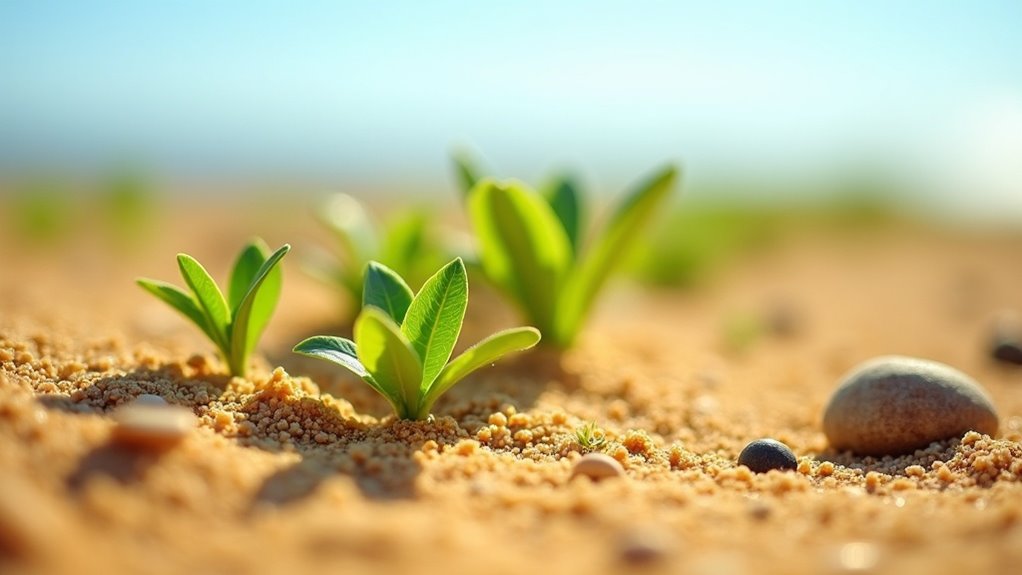
Yes, plants can grow in sandy soil, but they need special care. The large particle size leads to quick drainage, making moisture retention a challenge. You’ll find that drought-tolerant plants thrive, but frequent watering and regular nutrient applications are necessary to guarantee growth. To improve success, enrich the soil with organic matter for better moisture retention. With the right plant choices and soil amendments, you can create a thriving garden in sandy conditions. There’s more to explore about ideal gardening practices.
Key Takeaways
- Many plants can grow in sandy soil due to excellent drainage and quick warming, but they require specific adaptations for moisture retention.
- Drought-tolerant species like lavender and sedum thrive well in sandy conditions with minimal water.
- Rapid drainage in sandy soil necessitates frequent watering and regular nutrient applications to support plant growth.
- Adding organic matter can improve moisture retention and nutrient availability, enhancing plant health in sandy environments.
- Choosing the right plants is crucial; moisture-loving species may struggle without proper soil amendments and care.
Understanding Sandy Soil Characteristics
Sandy soil, with its large particle sizes ranging from 0.05 to 2 mm in diameter, presents unique characteristics that greatly influence plant growth.
Its gritty texture allows for rapid drainage, meaning it doesn’t retain moisture effectively. This can make it difficult for plants to access essential nutrients without frequent fertilization due to low nutrient retention.
Sandy soil’s rapid drainage limits moisture retention, making nutrient access challenging for plants without regular fertilization.
Additionally, sandy soil warms and cools quickly, impacting plant growth cycles. While it offers good gas diffusion for root health, this quality further contributes to its moisture retention issues.
Understanding these soil characteristics is vital for successful gardening in sandy environments.
Benefits of Growing Plants in Sandy Soil
In gardening, the unique properties of sandy soil can actually be advantageous for certain plants.
Here are some benefits of using sandy soil for your garden:
- Excellent drainage reduces the risk of overwatering and root rot.
- It warms up quickly in spring, allowing for earlier planting.
- Drought-tolerant plants thrive, requiring less water and maintenance.
- Sandy soil is easier to work with, promoting a low-compaction environment.
These benefits create ideal conditions for plants that grow well in sandy soil, enabling you to cultivate a low-maintenance garden that flourishes even in challenging environments.
Recommended Plants for Sandy Soil
When selecting plants for sandy soil, you’ll find a variety of options that not only thrive in these conditions but also enhance your garden’s aesthetic and ecological value.
The best plants for a sandy soil garden include Black-eyed Susan, which attracts pollinators with its summer blooms, and lavender, an aromatic herb that flourishes with minimal watering.
Sedum, a drought-tolerant succulent, is another excellent choice. Coreopsis adds vibrant color while requiring little maintenance, and daylilies adapt well, providing beautiful blooms from spring to summer.
These plants not only grow well in sandy conditions but also contribute to a sustainable garden environment.
Challenges of Gardening in Sandy Soil
Gardening in sandy soil presents several unique challenges that can impact plant health and growth.
Gardening in sandy soil poses distinct challenges that can significantly affect plant vitality and development.
With its rapid drainage, sandy soils often require:
- Frequent watering to maintain moisture levels for plant growth.
- Regular nutrient applications, as fertilizers leach quickly from the soil.
- Amendments to increase organic matter, improving nutrient retention.
- Consideration of plant choices, since moisture-loving species may struggle in these conditions.
Without addressing these issues, you might find your plants experiencing drought stress or nutrient deficiencies, ultimately hindering their establishment and overall vigor.
Understanding these challenges is essential for successful gardening in sandy environments.
Improving Sandy Soil for Better Plant Growth
Improving sandy soil is essential for enhancing plant growth and overcoming the inherent challenges of this soil type.
Start by adding organic matter, such as compost or peat, to boost moisture retention and nutrient availability. Regular soil testing helps you identify pH and nutrient levels, guiding your amendments. Incorporate well-rotted manure or composted materials to improve the soil’s water-holding capacity.
Additionally, mulching with organic materials retains moisture and gradually enriches the soil as it decomposes. Since sandy soils drain quickly, frequent irrigation may be necessary; consider drip irrigation systems for efficient water delivery to your plants’ roots.





