
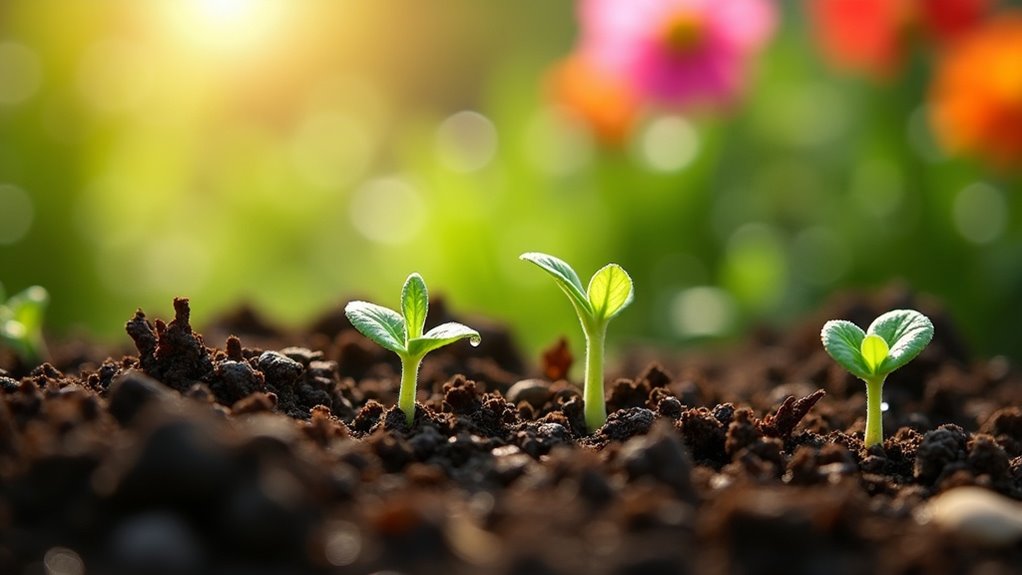
Yes, plants can grow through mulch, but several factors influence their success. The type of mulch, its thickness, and moisture drainage all play significant roles. Organic mulches enrich soil and support plant growth, while thick layers or coarse materials can hinder germination and access to nutrients. It’s essential to monitor mulch depth and moisture levels to guarantee healthy growth. For more insights on optimizing your mulched garden, there are effective strategies you can explore.
Key Takeaways
- Plants can grow through mulch, but excessive depth (over 8 inches) may hinder nutrient and moisture access, complicating germination.
- Coarse mulch can obstruct seed germination, while finer materials promote root penetration and moisture retention.
- Organic mulch enriches soil as it decomposes, supporting plant growth and microbial activity.
- Regular monitoring of mulch depth is essential, especially for shallow-rooted plants needing thinner layers.
- Adequate watering during hot periods is crucial for plants growing in mulched areas to establish healthy root systems.
Understanding Mulch and Its Role in Gardening
Mulch acts as a protective barrier for your garden, playing an essential role in maintaining soil health and optimizing plant growth. It retains soil moisture, suppresses weeds, and regulates temperature, creating ideal conditions for your plants.
However, if you apply mulch too thickly, it can hinder seed germination and create barriers for seedlings, limiting their access to nutrients in the bare soil below. To promote effective growth, aim for a mulch depth of about 8 inches but consider clearing it at planting sites for perennials.
This approach helps guarantee that your plants can establish strong roots and thrive in their environment.
Types of Mulch and Their Impact on Plant Growth
When choosing mulch, consider the differences between organic and inorganic options, as they can greatly influence plant growth.
The texture of the mulch also plays an essential role; finer materials tend to improve soil quality, while coarser types may obstruct seed germination.
Additionally, maintaining an appropriate mulch depth is important; too much can create barriers, while too little may not retain enough moisture for your plants.
Organic vs. Inorganic Mulch
While choosing the right type of mulch for your garden, it’s essential to contemplate how organic and inorganic options differ in their impact on plant growth.
Organic mulches, like wood chips and straw, enrich the soil as they decompose, promoting nutrient availability and microbial activity. Make sure to apply a 2-3 inch layer for effective weed suppression and moisture retention.
In contrast, inorganic mulches, such as gravel or plastic, don’t add organic matter and can hinder seed germination.
Understanding these differences helps you create a thriving garden environment, maximizing your plants’ growth potential and overall health.
Mulch Texture Effects
Choosing the right mulch texture considerably affects plant growth and development. Coarse mulch, like large wood chips, can impede seed germination, while finer mulches, resembling compost, support easier root penetration. Finer textures retain moisture better, creating a favorable environment for plants. Heavy mulch layers may hinder seed-to-soil contact, making shallow layers preferable. Additionally, the decomposition rates of organic versus inorganic mulches affect nutrient availability.
| Mulch Type | Texture | Impact on Growth |
|---|---|---|
| Coarse Mulch | Large chips | Hinders germination and growth |
| Fine Bark Mulch | Fine texture | Supports root penetration and moisture |
| Organic Mulch | Variable | Enhances nutrient availability |
| Inorganic Mulch | Consistent | Limited nutrient contribution |
Mulch Depth Considerations
Understanding the appropriate mulch depth is essential for optimizing plant growth, as it directly influences moisture retention and weed suppression. A recommended depth of at least 8 inches helps achieve these goals.
Fine bark mulch decomposes quickly, enriching the soil, while coarse mulch may hinder seed germination and root establishment. Be cautious, as heavy layers can block seeds from reaching the soil, limiting their growth.
Shallow-rooted plants may struggle in deeper mulch, facing difficulties accessing moisture and nutrients. Regularly monitoring and adjusting mulch depth guarantees it supports rather than impedes the growth and spread of your plants.
The Importance of Mulch Thickness
When it comes to gardening, the thickness of your mulch plays a critical role in plant health and growth. Ideally, aim for at least 8 inches to optimize moisture retention and suppress weeds.
However, too much mulch can impede seed germination, as seeds struggle to penetrate the barrier. Shallow-rooted plants particularly benefit from a thinner layer, ensuring access to soil nutrients and moisture.
Additionally, coarse mulch can destabilize seedlings, hindering root establishment. Maintaining the right mulch depth is essential for balancing moisture retention while allowing your plants to thrive, directly impacting their ability to access crucial nutrients from the soil.
Selecting the Right Plants for Mulched Areas
Selecting the right plants for mulched areas greatly influences their success and sustainability in your garden. Opt for annuals like petunias, begonias, and marigolds, as they thrive better in mulch.
Choose plants with shallow root systems to establish easily without competing for nutrients below. Experiment with finely broken down mulch resembling compost to enhance seed germination and establishment.
Additionally, consider native flora, as they adapt well to local conditions and require less maintenance. Regularly monitor mulch depth, ideally keeping it around 8 inches, ensuring your selected plants have adequate access to moisture and nutrients for ideal growth.
Techniques for Planting in Mulch
While you can enhance your planting success in mulched areas through careful techniques, it’s crucial to approach the process with precision.
Consider these strategies for ideal results:
- Use black plastic pots to mark planting spots, keeping the mulch intact.
- Choose 2-gallon pots for 1-gallon plants to allow room for growth.
- Remove pots immediately after planting to prevent root and mulch interference.
- Maintain a shallow mulch depth for shallow-rooted plants to guarantee access to moisture.
Regularly check moisture levels and space plants appropriately to encourage healthy growth and minimize competition with the mulch.
The Benefits of Organic Mulch for Soil Health
Using organic mulch greatly enhances soil fertility by breaking down and releasing essential nutrients as it decomposes.
It also improves moisture retention, ensuring that your plants have consistent access to water, which is vital for their growth.
Additionally, this mulch promotes microbial activity, fostering a thriving ecosystem of beneficial organisms that support healthy soil and robust plant development.
Enhances Soil Fertility
Organic mulch plays an essential role in enhancing soil fertility, benefiting not just individual plants but the entire ecosystem.
As organic materials like shredded leaves or straw decompose, they enrich the soil, leading to better growth conditions.
Here are some key benefits:
- Increases nutrient availability through decomposition.
- Improves soil structure for better aeration and water infiltration.
- Boosts microbial activity, aiding nutrient cycling.
- Reduces competition from weeds, allowing plants to thrive.
Improves Moisture Retention
Mulch greatly enhances moisture retention in soil, which is essential for healthy plant growth. Organic mulch, like shredded leaves or bark, creates a barrier that minimizes evaporation. This can reduce your irrigation needs by up to 50% and keeps soil temperatures cooler. A depth of 3-4 inches is recommended for ideal results. Additionally, as mulch decomposes, it enriches the soil with nutrients that further improve moisture retention. The table below summarizes these benefits:
| Benefit | Description | Impact on Plants |
|---|---|---|
| Evaporation Reduction | Lowers moisture loss from soil | Keeps roots hydrated |
| Temperature Regulation | Maintains cooler soil temperatures | Reduces heat stress |
| Nutrient Addition | Decomposing mulch enriches soil | Supports growth |
| Recommended Thickness | 3-4 inches for best results | Enhances effectiveness |
| Soil Structure Improvement | Promotes water infiltration and reduces runoff | Maximizes moisture access |
Promotes Microbial Activity
While you may not always see it, the decomposition process of organic materials creates a thriving community of microorganisms essential for soil health. This microbial activity enhances nutrient cycling, improves soil structure, and promotes vigorous plant growth.
Here’s how organic mulch contributes:
- Provides a rich source of nutrients as it breaks down
- Supports diverse microorganisms, including beneficial bacteria and fungi
- Improves plant nutrient availability for healthier growth
- Retains moisture, creating ideal conditions for microbial life
Regularly replenishing organic mulch guarantees sustained microbial activity, fostering long-term soil fertility and ecosystem resilience, ultimately benefiting your garden.
Common Challenges When Growing Plants Through Mulch
Growing plants through mulch can present several challenges that may hinder their success. If the mulch depth exceeds 8 inches, plants struggle to access essential nutrients and moisture from the soil.
Coarse mulch can inhibit seed germination, reducing plant establishment and overall diversity. Additionally, heavily mulched areas limit seed access to the soil, complicating penetration and germination.
Regular watering is essential, as moisture drains quickly, especially during hot weather, making monitoring important.
Perennials often face more difficulties than annuals, as they may find it challenging to establish root systems in a loose mulch environment, affecting their long-term growth potential.
Strategies for Successful Plant Growth in Mulched Environments
Successfully cultivating plants in mulched environments requires a strategic approach to overcome the challenges that arise from excessive mulch depth and texture.
Here are some effective strategies to guarantee successful growth:
- Maintain a mulch depth of at least 8 inches to retain moisture and suppress weeds.
- Opt for fine, decomposed mulch to support seedlings better than coarse types.
- Water regularly, especially during hot, dry periods, as moisture drains quickly.
- Use black plastic pots to mark planting spots, minimizing disturbance to the mulch.





