
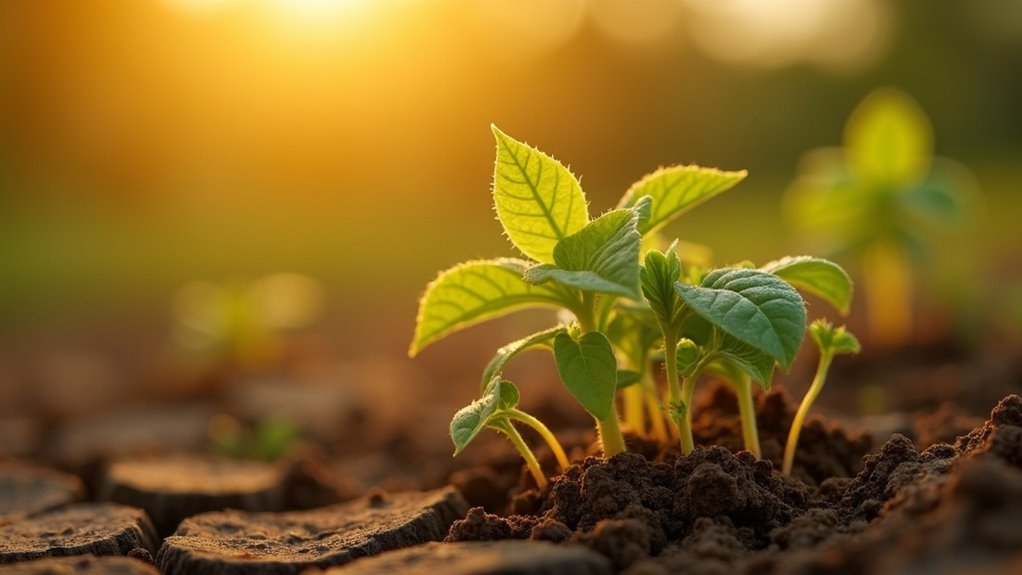
Yes, plants can recover from heat stress, but it depends on the damage they’ve sustained and the care you provide. Signs like wilting, curling leaves, and flower drop indicate stress. To aid recovery, employ deep watering, apply mulch to conserve moisture, and monitor conditions closely. Make certain to trim dead foliage to encourage new growth. Understanding effective strategies will guarantee a smoother recovery for your plants. There’s more to explore about nurturing their health during heat events.
Key Takeaways
- Plants can recover from heat stress, but recovery time varies based on the severity of damage.
- Deep watering encourages root growth and helps plants access moisture during high temperatures.
- Applying mulch conserves soil moisture and regulates temperature, aiding recovery.
- Trimming severely damaged foliage can redirect energy toward new growth and recovery.
- Monitoring environmental conditions and using shade cloth can support plant recovery efforts.
Understanding Heat Stress in Plants
When plants are exposed to high temperatures and intense sunlight for too long, they experience heat stress, which can lead to serious physiological changes.
Stressed plants often exhibit signs of heat stress, such as wilting, leaf curling, and flower drop. These responses occur as survival mechanisms, reducing water loss and conserving energy.
Ideal temperatures for most crops range from 68-86°F (20-30°C), and exceeding 90°F greatly hampers plant growth.
Recovery time from heat stress varies based on damage severity, ranging from days to months. Providing adequate watering and shade can facilitate recovery, but prolonged stress may cause irreversible harm.
Identifying Symptoms of Heat Stress
Heat stress manifests through various visible symptoms that signal a plant’s struggle against excessive temperatures.
You might notice wilting of leaves and flowers, even when the soil remains moist; this indicates a failure in water uptake due to heat. Curling leaves often occur as plants reduce surface area to conserve moisture.
Wilting leaves and curling can signal heat stress, indicating a plant’s struggle to take up water despite moist soil.
Leaf scorch, featuring brown, dry edges, results from rapid water loss. Additionally, yellowing leaves, especially at the bottom, signal moisture deficiency and heat stress.
Finally, flower drop may happen as plants prioritize survival, leading to reduced blooming potential. Identifying these symptoms is essential for effective management.
Effective Recovery Strategies
Effective recovery strategies are essential for helping plants regain their health after experiencing heat stress.
Start with deep watering to thoroughly saturate the soil, promoting deep root growth and preventing dehydration.
Applying a 2-3 inch layer of mulch conserves soil moisture, reduces temperature, and limits watering frequency.
Trim only severely damaged foliage, allowing heat-stressed plants to redirect energy toward new growth without the strain of excessive pruning.
Monitor environmental conditions closely, and use shade cloth if necessary to shield recovering plants from further heat stress.
These strategies create a supportive environment for your plants’ recovery and resilience.
Importance of Proper Watering Techniques
Proper watering techniques play a critical role in helping plants withstand and recover from heat stress. Deep watering encourages root growth, allowing plants to access moisture during high temperatures when surface soil dries quickly.
Water early in the morning for ideal moisture absorption, as midday watering leads to rapid evaporation and evening watering risks fungal diseases. Always check soil moisture to verify accurate watering, as plants can wilt even when the soil feels wet.
For container plants, you may need to water daily or twice-daily. Adding water-retaining granules to potting mix enhances moisture retention, aiding recovery from heat stress.
Maintaining Plant Health Post-Recovery
After addressing watering techniques to help plants cope with heat stress, it’s important to focus on maintaining their health as they recover.
Continue deep watering to rejuvenate root systems, ensuring adequate moisture during hot weather. Hold off on fertilizing until you see robust growth; premature feeding can worsen stress.
Apply a 2-3 inch layer of mulch around plants to conserve water and regulate soil temperature, reducing evaporation.
Regularly monitor for new growth, indicating recovery, and remove any dead foliage to direct energy toward healthy parts.
Water early in the morning to prevent fungal diseases, supporting stronger recovery post-heat wave.





